What NRC Means
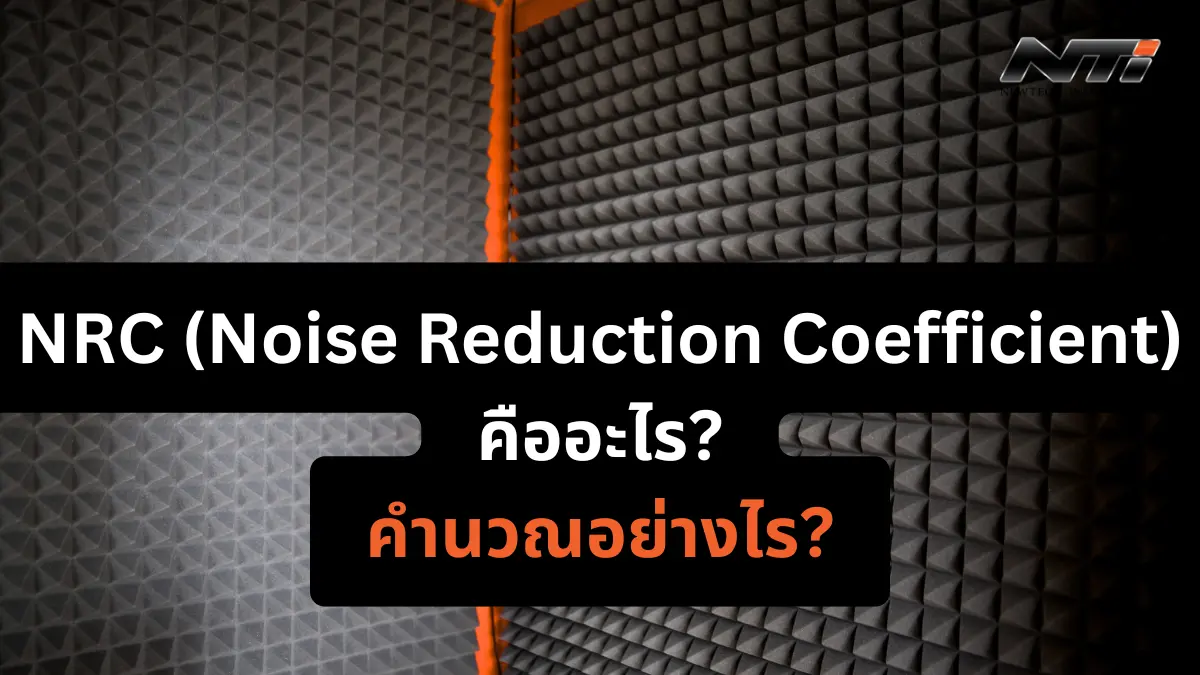
NRC (Noise Reduction Coefficient) is a value that measures how effectively a material absorbs sound, expressed as a number between 0 and 1 (some materials may exceed 1), where:
- 0 = the material reflects all sound (e.g. smooth metal sheet)
- 1 = the material absorbs all sound (in practice, no material achieves a perfect 1)
- Good sound-absorbing materials typically have an NRC of 0.75 or higher
How NRC Works
NRC is the average sound absorption at 250, 500, 1000, and 2000 Hz, which covers the frequency range of human speech.
How to Calculate NRC
1. Test Method
- Tested in a Reverberation Room according to the ASTM C423 standard
- Sound absorption is measured at 250, 500, 1000, and 2000 Hz
- The Sound Absorption Coefficient (α) is calculated for each frequency
2. Formula
NRC = (α250 + α500 + α1000 + α2000) / 4
(rounded to the nearest 0.05, e.g. 0.725 rounds to 0.75)
3. Calculation Example
| Frequency (Hz) | Absorption coefficient (α) |
|---|---|
| 250 | 0.65 |
| 500 | 0.80 |
| 1000 | 0.90 |
| 2000 | 0.85 |
Calculation:
NRC = (0.65 + 0.80 + 0.90 + 0.85) / 4
= 3.20 / 4
= 0.80
Result: this material has an NRC = 0.80
Applying NRC in Practice
Common Materials and Their NRC
| Material | NRC | Suitable For |
|---|---|---|
| Concrete wall | 0.05 | - |
| Thick carpet | 0.30-0.60 | Floors |
| Acoustic foam panels | 0.70-0.90 | Recording room walls |
| 5 cm fiberglass insulation | 0.90-1.05 | High-performance ceilings and walls |
| Heavy fabric curtains | 0.40-0.60 | Doors and windows |
Choosing Materials by NRC
- Meeting rooms/classrooms: use materials with NRC 0.75+
- Recording studios: use materials with NRC 0.90+
- Cinemas: use materials with NRC 0.85+ together with Diffusers
Limitations of NRC
- Does not cover very low frequencies (<250 Hz) - SAA (Sound Absorption Average) is also needed
- It is an average - it does not show performance at each frequency
- Actual installation conditions may differ from the test room
Testing NRC Yourself (Simple Method)
- Choose a test area of about 4x4 meters
- Measure the reverberation time with an app (e.g. Decibel X)
- Clap your hands and time how long it takes for the sound to die out
- Install the material to be tested
- Measure the reverberation time again
- Compare the results:
- Large reduction in reverberation time = high NRC
- Small reduction in reverberation time = low NRC
Summary
NRC is a key benchmark for selecting sound-absorbing materials. Understanding it helps you:
- Choose the right material for the job
- Design an effective noise control system
- Cut costs by avoiding trial and error
"An NRC of 0.80 means the material absorbs 80% of the sound that hits it."
Need NRC testing or help choosing sound-absorbing materials?
📞 Contact the experts at Newtech Insulation Co., Ltd. for acoustic analysis and precise recommendations!


 02-583-8035
 098-995-4650
 @newtechinsulation
 contact@newtechinsulation.com