

1. The Human Hearing Mechanism
The human auditory system consists of three main parts:
1.1 Outer Ear
The outer ear consists of the Pinna and the Ear Canal, which collect sound waves and channel them to the eardrum

(Illustration: structure of the outer ear)
1.2 Middle Ear
When sound waves strike the Eardrum, it vibrates and passes the vibration on to three tiny ear bones:
- Malleus (hammer)
- Incus (anvil)
- Stapes (stirrup)
These bones amplify the sound signal and pass it on to the inner ear
1.3 Inner Ear
The inner ear contains the Cochlea, whose Hair Cells convert sound waves into electrical signals that travel along the auditory nerve to the brain for interpretation
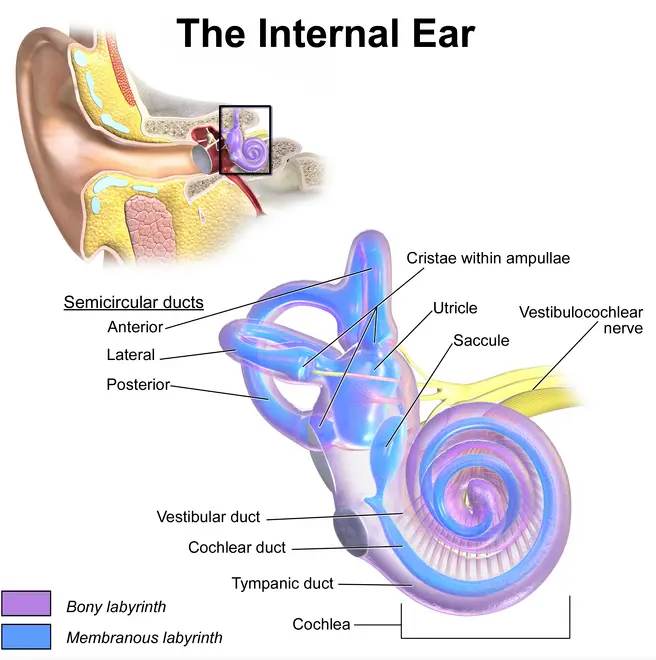
(Illustration: structure of the inner ear and cochlea)
2. Factors Affecting Sound Perception
Humans can hear sounds in the frequency range of 20 Hz to 20,000 Hz, but this ability declines with age. Other factors that affect sound perception include:
- Loudness (decibels) – Sounds louder than 85 dB can damage the hair cells in the cochlea
- Sound direction – The brain uses differences in timing and loudness between the two ears to locate a sound
- Environment – Noise can interfere with hearing
3. Hearing Disorders
Some people may experience hearing problems, such as:
- Hearing Loss – Caused by damage to the hair cells or auditory nerve
- Tinnitus – Hearing ringing in the ears without any external sound source
Summary
Human sound perception is a complex process, from the collection of sound waves by the outer ear and signal amplification in the middle ear to conversion into electrical signals in the inner ear. Taking care of your ears is therefore essential to preserving your hearing for as long as possible.


 02-583-8035
 098-995-4650
 @newtechinsulation
 contact@newtechinsulation.com